December 31, 2025
As Beyond Visual Line of Sight (BVLOS) operations scale, the safety question facing the UAS industry is evolving from whether autonomy can be used for operating multiple assets to whether people can safely oversee it.
When officially published, Part 108 will mark a fundamental shift in how the FAA expects operators and manufacturers to demonstrate safety in increasingly automated, remote, and multi-aircraft operations. For the first time, workload is no longer an assumed outcome of good design or training. Rather, workload is something that must be measured, evaluated, and defended; FortiFly was built for this purpose.
From Aircraft Control to Oversight Capacity
BVLOS operations under Part 108 formalize a transition that has been underway for years—from one-to-one aircraft control to one-to-many or even m:N operational oversight. In these operations, flight coordinators are no longer actively piloting every maneuver. Rather, operators supervise systems, manage exceptions, and intervene when automation reaches its limits—a case of human-on-the-loop (and eventually human out-of-the-loop), rather than human-in-the-loop.
This shift—from human-in-the-loop to human-on-the-loop—fundamentally changes what “safe operation” means. As long as humans remain responsible for monitoring, judgment, and intervention, human performance becomes the limiting factor on scalability.
While technology may enable higher ratios of unmanned assets to operators, humans ultimately determine whether those ratios are safe.
How Part 108 Changes the Workload Conversation
Historically, workload has typically been discussed as just a research concept or training consideration. Under Part 108, workload becomes an operational constraint with regulatory consequences.
Several sections of the proposed rule make this explicit. For example, §108.545(a)(4) introduces validation testing requirements to ensure that multi-UAS operations do not degrade a flight coordinator’s ability to manage workload. Similarly, §108.210 ties permissible aircraft oversight directly to what a flight coordinator is reasonably capable of handling across normal, abnormal, and emergency conditions—using a method acceptable to the FAA.
Together, these provisions establish workload as a safety boundary that must be demonstrated with objective evidence.
For operators and manufacturers alike, these provisions raise a critical question: How do you prove that workload remains within safe limits (or even maintains the same workload levels as baseline 1:1 operations) as operational complexity increases?
FortiFly: Measuring The Part 108 Workload Requirement
FortiFly is designed to help make sense of workload in complex aviation environments, including multi-UAS operations. Rather than relying on procedures or outcomes as stand-ins for workload, FortiFly measures it directly—using a human-centered approach that draws on multiple real-time data sources.
FortiFly integrates physiological, behavioral, and performance-based data streams—including eye tracking, pupillometry, heart rate and heart rate variability, speech, fine motor activity, audio interaction, tactile inputs, and task performance—to estimate workload across multiple channels (e.g., Visual, Auditory, Cognitive, Psychomotor, plus Speech and Tactile).
These measurements allow organizations to move beyond assumptions and directly observe how workload evolves as task demands, aircraft count, and operational conditions change.
Importantly, FortiFly is not adaptive automation. FortiFly is the measurement layer that enables informed automation decisions, operational limits, and certification strategies.
Objective Validation, Not Subjective Inference
To make sure FortiFly’s real-time workload estimates reflect what operators are actually experiencing, its algorithms have been validated against established post-simulation measures such as the NASA Task Load Index (NASA-TLX). This grounding in decades of human factors research helps connect real-time data with proven workload concepts, while avoiding the limitations of purely subjective or after-the-fact assessments. Workload is also baselined for each individual to ensure the right level of workload is being assessed for each operator.
The result is a defensible, data-driven method for evaluating whether workload is stable, optimized, increasing, exceeding acceptable limits—during normal operations as well as abnormal and high-stress scenarios, or even too low where operators can become less vigilant.
FortiFly’s capabilities directly support the intent of Part 108 workload validation testing; that is, demonstrating that workload management is not adversely affected as operations scale.
Supporting Multi-UAS Oversight
Part 108 also emphasizes continuous situational awareness and demonstrated skill for flight coordinators overseeing multiple aircraft (§108.310). While procedures and training remain essential, they can’t fully capture the day-to-day variability in human performance, task demands, and operating conditions.
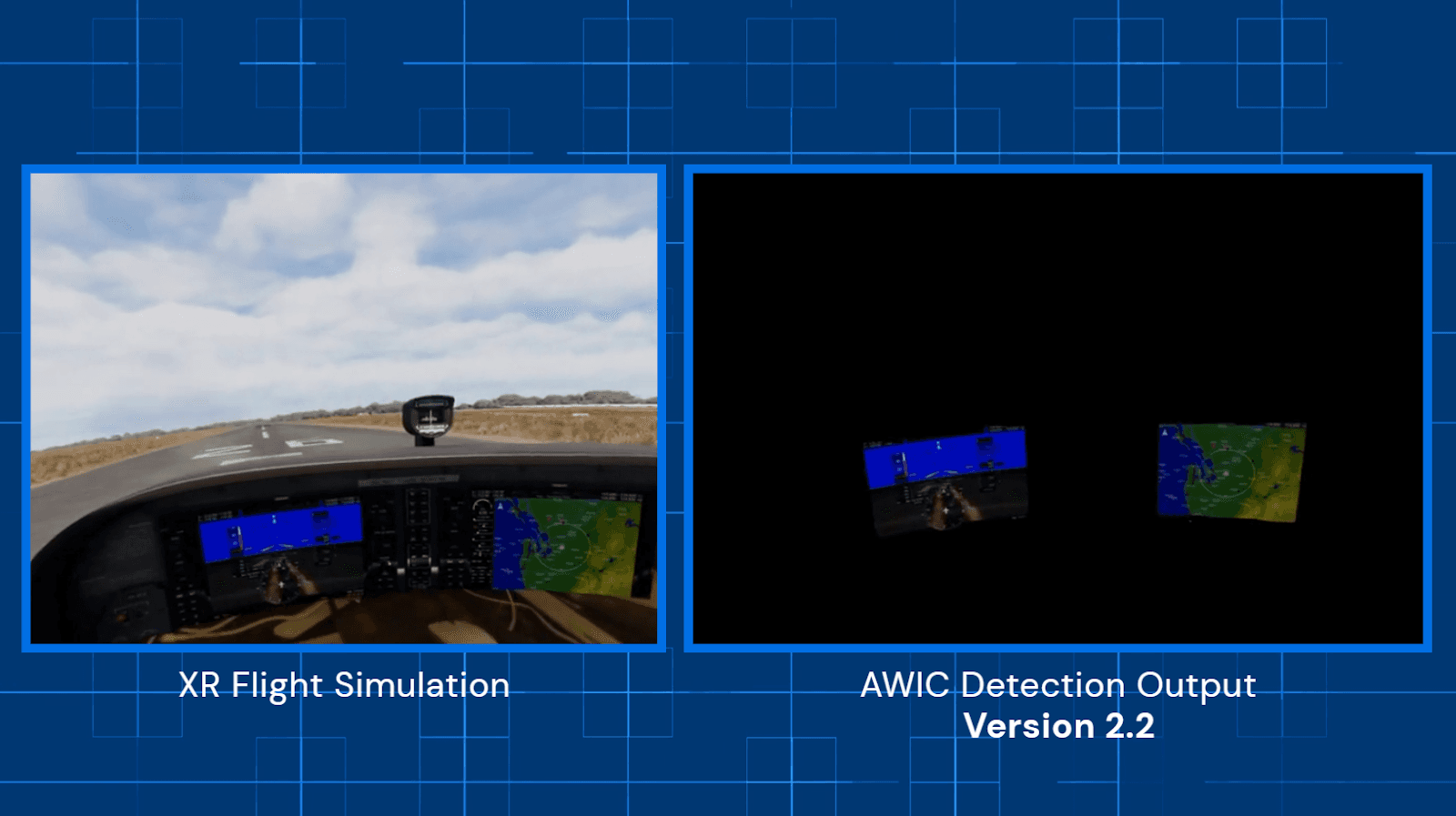
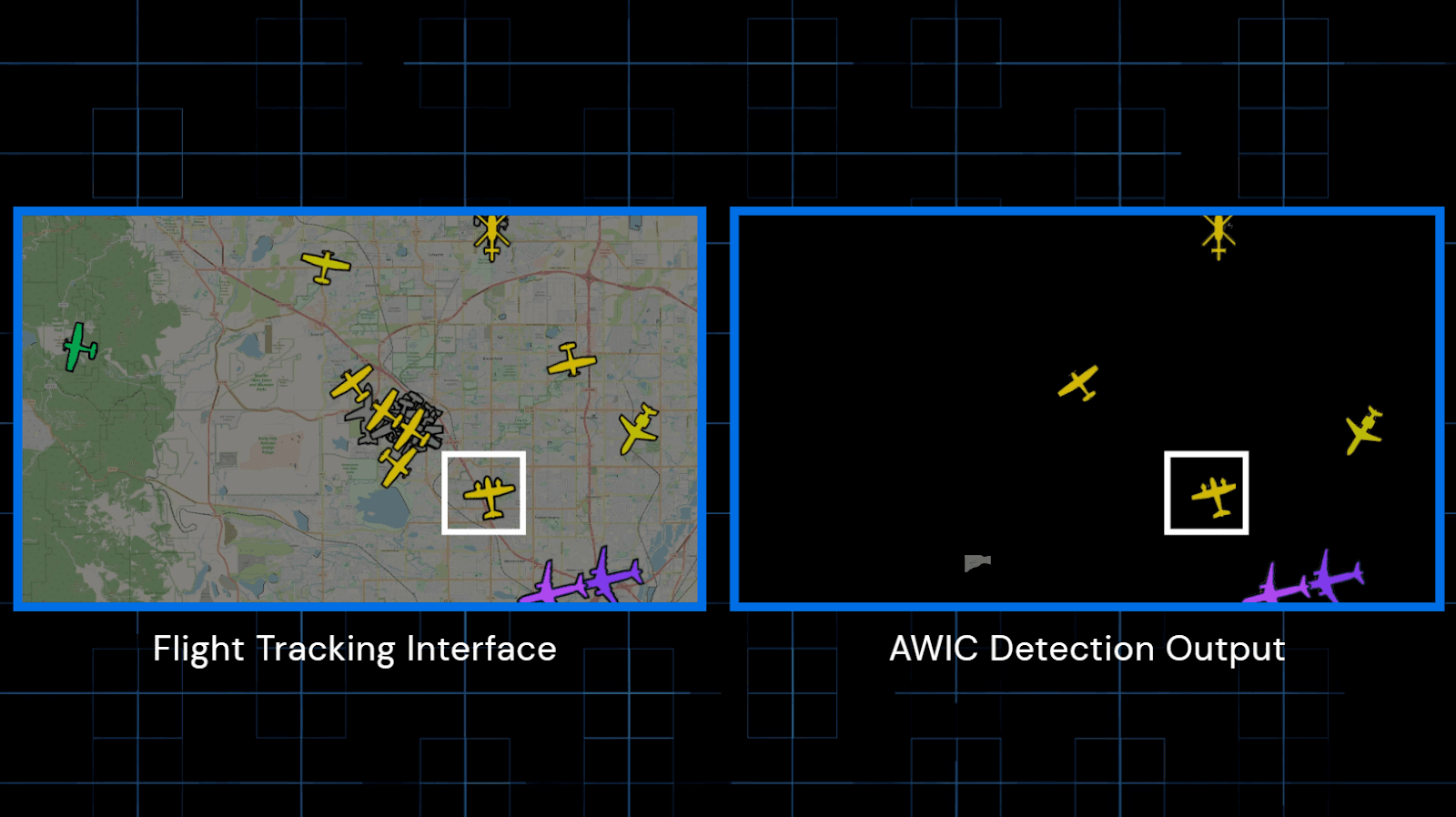
FortiFly helps address this gap by making workload visible and measurable during operationally representative testing. Additional FortiFly capabilities such as the Automatic Widget Identification Component (AWIC) further support workload by helping characterize visual attention demands across virtually any interface (including multiple displays) and with eye tracking bars, glasses, and AR/VR/XR goggles.
Rather than prescribing a single “correct” ratio, FortiFly enables organizations to determine realistic oversight limits grounded in observed human performance.
Learn more about FortiFly’s AWIC tool at [AWIC blog post link].
Turning Regulatory Intent Into Operational Evidence
For UAS operators and manufacturers preparing for Part 108, workload validation is not a paperwork exercise—it is a necessary factor for approval.
FortiFly enables organizations to:
Evaluate realistic one-to-many operational ratios based on measured human performance
Verify workload stability across normal, abnormal, and emergency operating conditions
Develop workload thresholds that inform operating instructions, training programs, and certification documentation
Produce objective, defensible evidence aligned with FAA expectations for validation testing under Part 108 without relying on assumptions or post-hoc justification
When the FAA asks for proof that workload “is not affected during an operation,” FortiFly answers that question with real time data and analysis.
Building a Safer Path to Scalable BVLOS
Part 108 reflects a broader shift in aviation safety. Scalability depends not just on what systems can do, but on what humans can safely supervise.
FortiFly helps bridge the gap between automation capability and human capacity by making workload measurable, evaluable, and defensible. As a result, FortiFly supports a future where BVLOS operations scale responsibly—grounded in evidence, not assumption.
FortiFly was built to meet the workload reality of modern aviation as well as support the upcoming Part 108 BVLOS requirements.